W.A.I.T (Webuters AI Tools)

W.A.I.T (Webuters AI Tools) is a suite of powerful AI-powered tools designed to streamline your writing process. From the innovative Blog Post Writer, Social Media Post Writer, Content Rewriter to Summarizer, W.A.I.T covers all your writing needs.

W.A.I.T

With W.A.I.T, you can effortlessly generate captivating blog posts, craft attention-grabbing social media copies, write engaging emails and letters, generate summaries, translate content into multiple languages, create catchy titles and relevant hashtags, and much more. It's like having a personal writing assistant at your fingertips.

What our clients say

Hear from the businesses we've helped transform through technology, strategy, and dedicated partnership.

Engaging with Webuters Technologies to deploy Salesforce for your business is a guaranteed win. Webuters provides professional experts that possess deep knowledge of the Salesforce ecosystem. This knowledge is not only limited to technical configuration and deployment but to practical adoption and best practice aspects as well. We have been working with Webuters to extend our small internal team’s reach with end user support queues, new enhancement build and integration needs for over three years. The output and deliverables over this period have been consistently outstanding.

Megan
Rainforest Alliance

Blogs

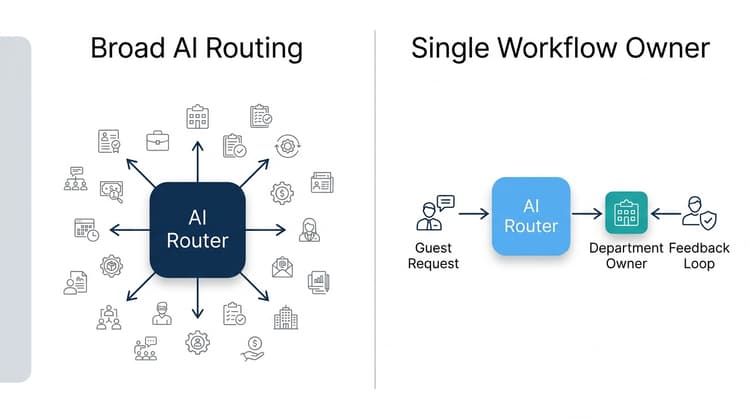
Side-by-side visual comparing broad AI routing with no workflow owner to a single-owner workflow chain for AI task routing.

AI Task Routing Won’t Save Your Hotel – Unless You Ground It in One Workflow
It’s 7:14 on a Tuesday morning at a 200-room hotel, and AI task routing is the last thing on anyone’s mind. A guest on the third floor reports a leaking faucet through the mobile app. Housekeeping flags a missing bathrobe on the second floor. The front desk needs a rollaway bed in room 412, and the GM wants last nig

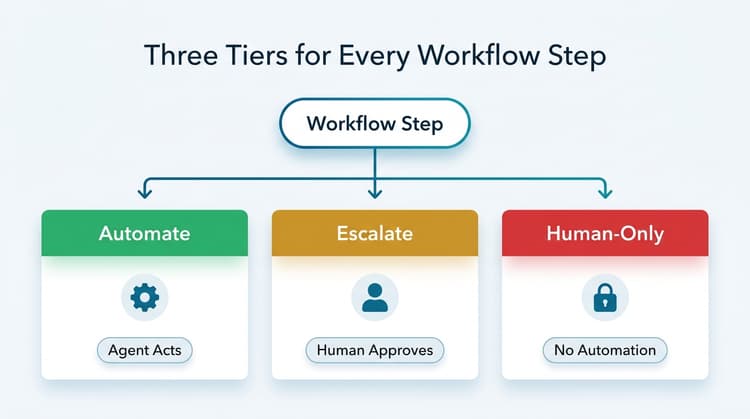
Three-tier decision framework showing a workflow step flowing into Automate, Escalate, or Human-Only columns with green, amber, and red color coding.

The AI Agent Decision Line: Automate, Escalate, or Keep Human-Only
Enterprise AI agents are the new frontier for operational efficiency, yet many leaders struggle with where to draw the line between automation and human control. It’s Monday morning, and the operations lead is pitching an enterprise AI agent for the claims intake process. The room splits. On one side: “This will cut

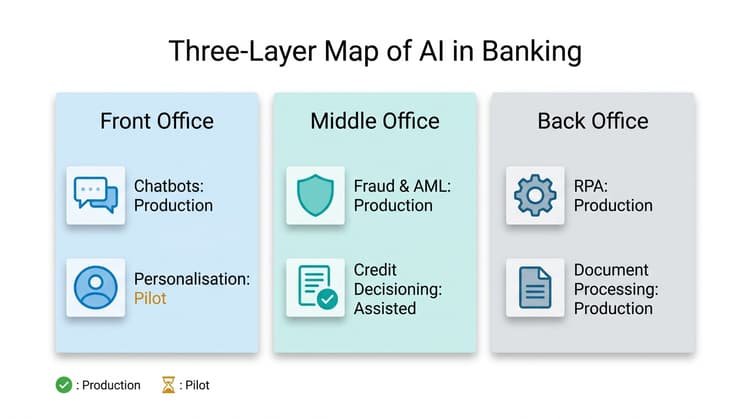
Three-column visual mapping front, middle, and back office AI applications with production or pilot status.

AI in Banking: The Three-Layer Map Every Leader Needs Before the Next Pilot
You have seen the polished demo. The boardroom screen glows with a model that predicts customer churn, flags suspicious transactions in milliseconds, and answers customer questions in a calm, synthetic voice. The promise: AI in banking will reshape everything from lending to risk. But the gap between demo and realit

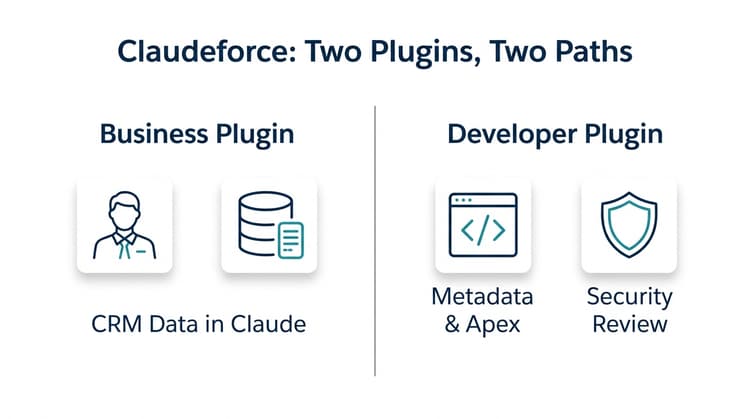
Side-by-side comparison of Claudeforce business plugin for sales reps and developer plugin for Claude Code metadata and Apex.

Claudeforce’s Developer Plugin Is the Real Story for Salesforce Teams (If You Can Govern It)
Salesforce MCP is the part of the Claudeforce announcement almost nobody is talking about, and it is the part that will change how your team works. When Salesforce and Anthropic

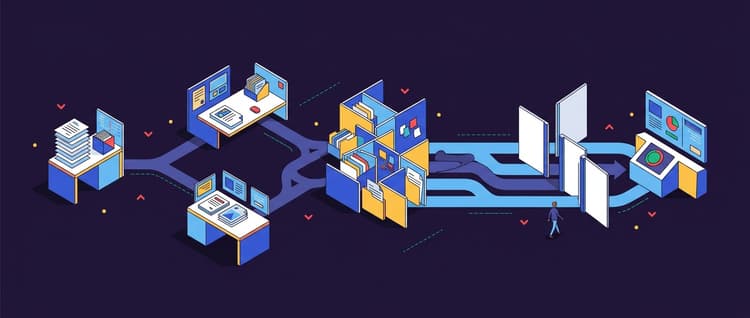
Isometric illustration: A branching workflow of a loan application moves through modular office stations, passing through document stacks, a bot

Loan Origination System: Why Projects Fail and How to Choose

You are sitting in a lending operations review meeting, staring at a dashboard from your current loan origination system that shows another month of delays. Loan officers say the system is too slow, underwriters complain about missing data, and the CFO asks why the cost per closed loan keeps climbing. A lineup of ve

Isometric illustration: A three-story bank building under construction with the middle floor tilted and missing support beams, faceless workers

nCino Implementation: Phases, Slip Points and Partner Selection

You’ve watched the demo. The flows are clean, the dashboards glisten, and the sales team promises a modern lending future. Then you sign, and reality sets in: an nCino implementation involves nine phases: discovery, design, configuration, integration, data migration, testing, training, go-live, and post-launch. Each

Lets work together
Do you have a project in mind?